Dairy Farm

Michigan State University
W. K. Kellogg Biological Station Calendar · People ·

Pasture-Based Dairy Research Facility

Overview:
The creation of a Pasture-based Rotational Grazing Dairy facility at KBS is a logical extension of the strong tradition of ecological research on natural/unmanaged terrestrial and aquatic systems and row-crop production that has been conducted over many decades at the Kellogg Biological Station (KBS). It will also foster and promote interactions with campus units that have had limited (or declining) participation in research, educational and outreach activities at KBS. The KBS Long Term Ecological Research (LTER) program is a model for integration of diverse methodologies (molecular tools to remote sensing) and expertise (agronomy to ecology to economics) while attracting funding from multiple sources to address fundamental questions in agricultural ecosystems. Integration of the row-crop and dairy production research programs at KBS provides a unique opportunity to examine agriculture from an integrated, whole system perspective.

A pasture-based KBS Dairy Farm could serve as a research center for faculty and students from a broad range of disciplines, enhance educational and outreach programs throughout MSU, and serve the needs of a growing number of stake-holders who have no other venue for getting the information they need to make informed decisions about alternative animal production practices. The KBS location offers the opportunity to ask questions related to integration of agriculture into a diverse landscape with reciprocal effects on biogeochemical, population, and community processes. Integration in this way will provide opportunities to address a broad range of questions (ecological, social, economic,,,) related to sustainable agricultural and food system practices that are fundamental to maintaining agriculture as a viable economic endeavor in Michigan.

KBS Pasture Dairy - Cows on pasture.

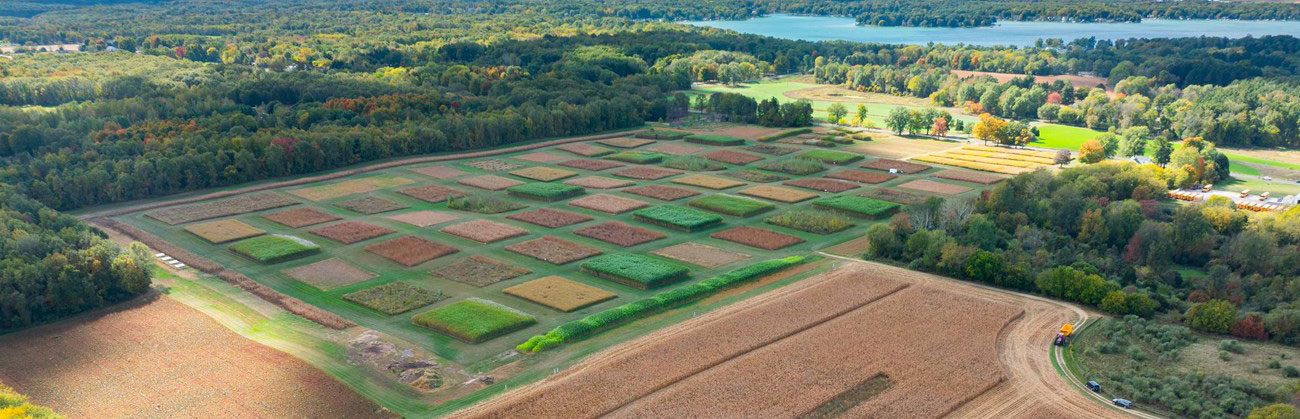
Construction on the new dairy facility is expected to begin later this fall and be completed by spring 2009.  The pasture dairy will consist of two pastures.  A larger (160 acre) pasture will be used for lactating animals and a smaller (35 acre) pasture will be grazed by developing heifers and dry cows.  The larger pasture will be equiped with a K-Line irrigation system and both pastures will be subdivided for rotational grazing.   A free-stall barn with milking parlor will be located in the middle of the larger pasture.  The milking parlor will contain two robotic milking systems (www.lelyusa.com).

Dairy Pasture Layout

Research Foci:
Creation of a pasture-based research facility at KBS will provide a unique facility for conducting basic research on applied questions in this arena. Facility design will need to allow flexibility for addressing a range of questions from short-term to long-term that are important to the farmers in the region. The facility will provide an excellent venue for education and outreach programs that will demonstrate how integration of ecological, social and economic principles are important to the establishment of a sustainable agricultural production system that is an alternative to the large, often corporate, farm model. Refocusing the KBS Dairy to a pasture-based system would promote research on a number of topics relevant to agricultural, ecological, evolutionary, social/economic sciences.

We have identified four broad areas of research that could serve as foci for this development at the KBS Dairy Farm (see below 1-4). These areas were identified because they could: (1) build on existing research strengths at MSU, (2) provide opportunities for greater integration across disciplines, (3) be relevant to the development of models for sustainable agriculture production, and (4) provide farmers/practitioners with the information they need to make informed decisions on the development and management of their farms.

Proposed Research Focus Areas and Example Research Questions

  • Pasture production
    1. What combinations of species and grazing practices influence the quality and composition of pastures?
    2. How does water/irrigation/precipitation influence sustainability of pasture production? Nutrient losses? Animal production?
    3. How do other species (weeds, birds, mammals, insects, microbes etc) respond to variation in grazing practices and pasture composition?
  • Nutrient management/cycling in grazed pastures
    1. How are nutrients used throughout the whole system by animals fed grain and grass, the LFL and LTER and what are the byproducts of the system?
    2. How do other non-nutrient components such as carbon dioxide and ammonia get utilized in the system?
  • Animal Health and Welfare
    1. How does a grazing system affect the longevity, health and behavior of animals?
    2. Do grazing systems influence the transmission of diseases (epizootic and other)?
    3. What traits (genetic) influence the production, health and welfare of animals in grazed systems?
  • Economic, Social, and Food System
    1. How does food quality (milk, cheese, and other) change when animals are raised under different systems?
    2. What ecosystem services (indirect and direct) are provided by a pasture-based dairy system?
    3. What supply chains are affected (or will affect) the marketing of pasture-based dairy products?
    4. What are impediments or enablers of these types of systems playing a significant role in the overall food system?

Existing Resources:
There are already a number of faculty on campus and in residence at KBS whose research interests overlap with the focal areas identified above. These include (but are not limited to) faculty in the Colleges of Agriculture and Natural Resources (e.g. ANS, CSS, F&W, CARRS, AgEcon, Biosystem Eng), Natural Science (Zoology, Plant Biology, MMG), Social Science (Geography, Sociology) and Veterinary Medicine (Large Animal). Critical to the success of this facility will be KBS-based faculty with research interests and expertise in one or more of these areas. We are fortunate that two new faculty positions were identified as part of the Quality Fund Initiative in Sustainable Agriculture and Food Systems that can enhance our KBS-based faculty involvement. These are positions in Animal Production/Grazing Ecology and Consumer Behavior. Several recent and pending hires on campus in the areas of Animal Health and Welfare (e.g. Janice Swanson, Animal Welfare Position, ANS) and Environmental Management (e.g. Wendy Powers) also are likely to play important roles in the development of this facility.


For Additional Information on the Pasture-Based Dairy Project Contact:

Mat Haan

W.K. Kellogg Biological Station

3700 E. Gull Lake Drive

Hickory Corners, MI 49060

haanm@msu.edu

269-671-2360

Last updated: August 29, 2008

Comments: web-feedback@kbs.msu.edu

A Legacy of Conservation
A Commitment to Sustainability

© 2006 Michigan State University Board of Trustees.
MSU is an affirmative-action, equal-opportunity institution.